
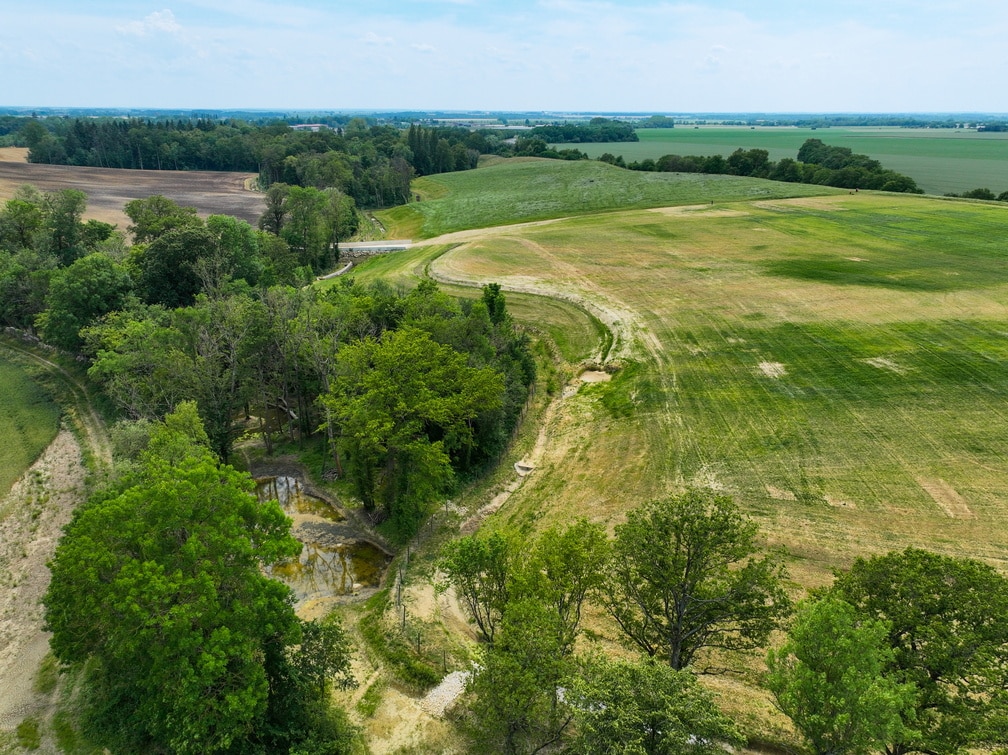
On the occasion of World Wetlands Day, this article looks at the importance of these essential environments for biodiversity and the water cycle. At ECT, the preservation, restoration and creation of wetlands are an integral part of our development projects. Through concrete actions in the field, we are helping to restore the central role of these fragile but vital ecosystems.
Strong commitments
For ECT, wetlands are a major factor in the design and implementation of its projects.
Protecting biodiversity is at the heart of our actions. Faced with the alarming erosion of living organisms, we are taking action to preserve the ecosystem services that are essential to human beings. By preserving, restoring or recreating natural environments, we help to strengthen biodiversity and limit its decline.
We pay particular attention to wetlands because of the essential role they play in ecosystems. Situated at the interface between aquatic and terrestrial environments, they are among the richest habitats in terms of flora and fauna. Many species, including amphibians, insects, birds and chiropterans, find favorable conditions for breeding and feeding. Wetlands also help to regulate the water cycle, providing storage, filtration and regulation functions.
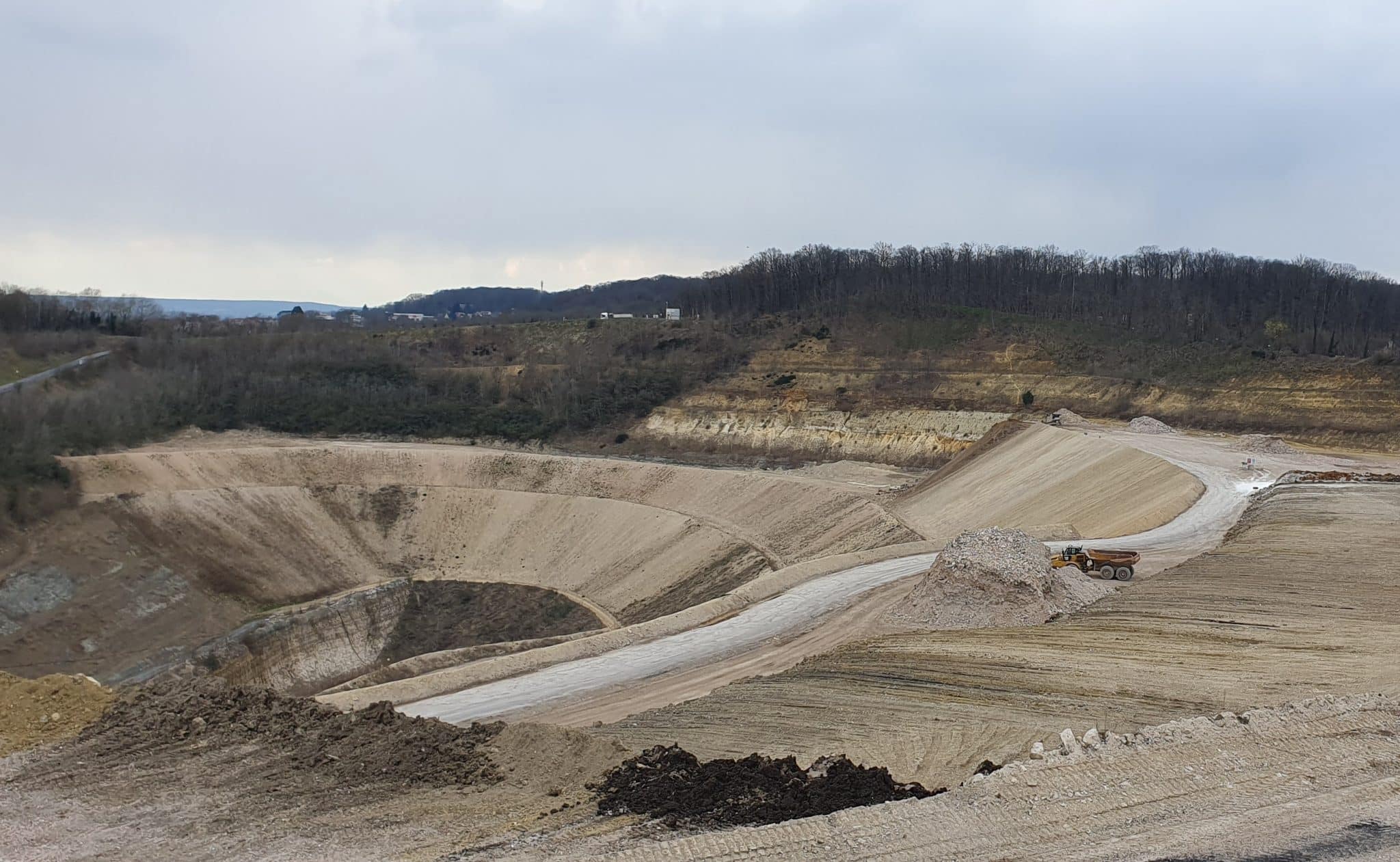
At ECT, we transform derelict and degraded land into undeveloped sites with an environmental and social vocation, thanks to the reuse of excavated soil from the construction industry. Our aim is to achieve a positive biodiversity balance, above and beyond regulatory requirements. To achieve this, we have made a commitment to Nature with the OFB, and we systematically assess the ecological quality of our projects. Right from the design stage and throughout the construction process, we integrate biodiversity-friendly actions, whether to preserve, enhance or create wetlands.
Concrete actions
We are implementing several concrete actions to protect and restore wetlands on our sites.
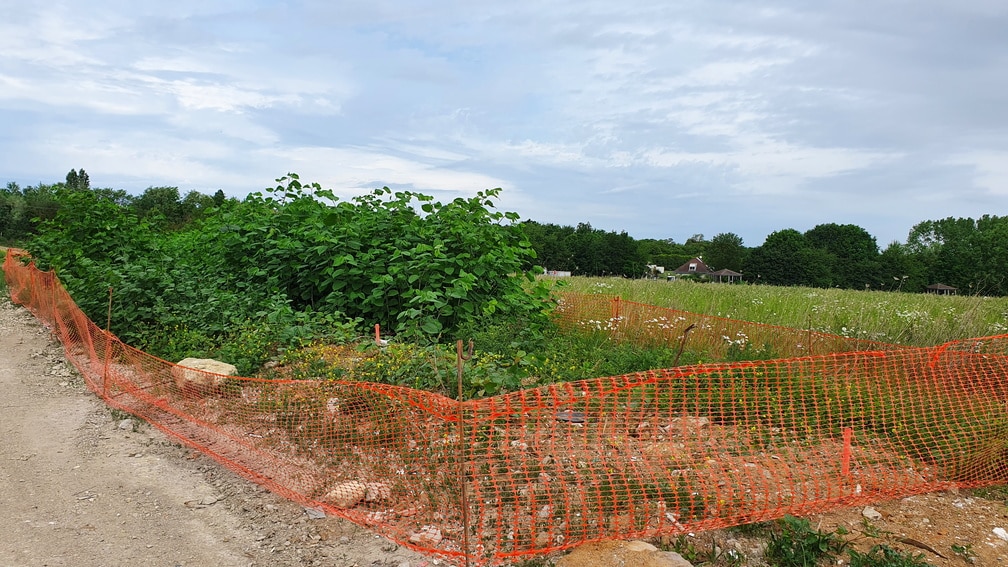
Our first priority is to avoid areas of high ecological concern. To this end, we carry out fauna and flora diagnostics prior to each project. During construction, we protect and secure identified areas with site fencing. We also install anti-return barriers for amphibians. These devices enable amphibians to leave work zones and prevent their return.
We also limit discharges into the natural environment. To this end, we create ditches to store and infiltrate runoff water. We complement these features with filtration devices such as redents or straw filters.
Where necessary, we restore and enhance preserved natural environments. In particular, we can:
- Clean areas
- Clean up areas affected by landfill
- Thinning overgrown woodlands
Right from the design stage, we take ecological issues into account. As a result, we carry out a wide range of projects to promote biodiversity:
- Variation in levelling
- Creation of natural environments adapted to the local context to reconstitute green and blue belts
- Diversifying habitats to accommodate more species
- Creation of woodlands, copses, hedges, meadows, calcareous grasslands and ponds
- Installation of micro-habitats for wildlife
At the edge of the project, we also reinforce ponds and wetlands. We connect them to the surrounding ditches to guarantee their water supply. We also adapt ditch depths and profiles to encourage the natural fluctuation of water levels.
Two emblematic wetland restoration projects in Seine-et-Marne
The Grisy-Suisnes and Roissy-en-Brie projects are concrete examples of our actions in favor of wetlands.
Since 2023, we have been carrying out ecological monitoring at these two sites. They will extend over 30 years at Grisy-Suisnes and 5 years at Roissy-en-Brie. Initial results are very encouraging. We’re seeing a strong presence of avifauna and the gradual return of amphibians, with the appearance of the first eggs.
The results of the monitoring show that :
- Vegetation is recovering in all sectors
- The establishment of vegetation characteristic of wetlands
- Natural seasonal fluctuations in water levels
- Functional ponds that retain water for most of the year

In Grisy-Suisnes, as part of a project supported by Safer Île-de-France, we have recreated more than 6,000 m² of wetlands on a wooded edge. Over and above the regulatory objective, we sought to guarantee the functionality and longevity of these environments.
With the support of the Water Police Department of the Seine-et-Marne DDT and the Dryopteris consultancy, we are working in several phases, in 2019 and autumn-winter 2022.
On a total surface area of 6,260 m², we have :
- Brightens the middle
- Cut the ground to different depths
- Seeding
- Create micro-habitats for wildlife
We have also restored or created several ponds to accompany these wetlands.
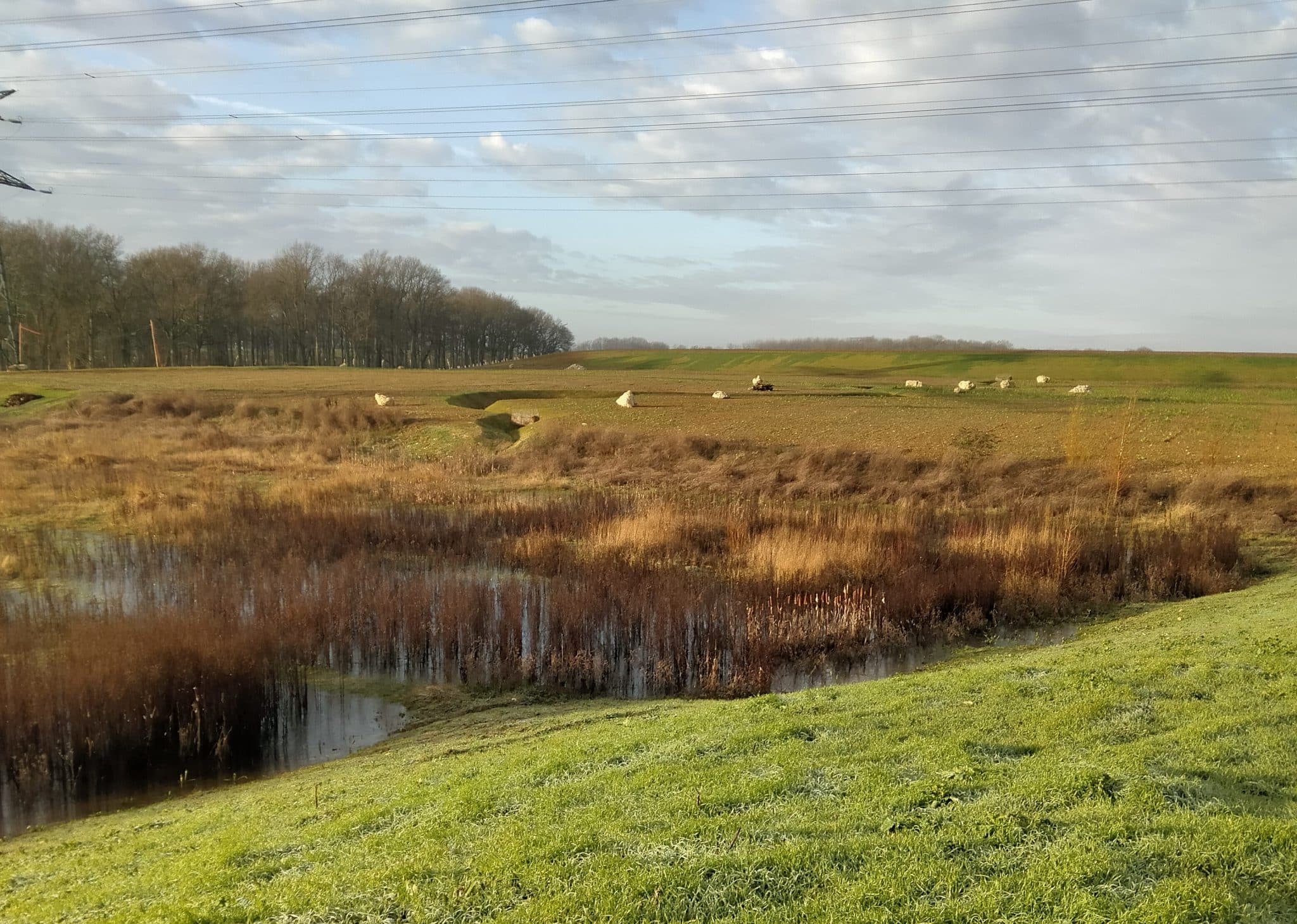
In Roissy-en-Brie, as part of an agricultural rehabilitation project, we transformed a former artificial depression into a 3.3-hectare ecological development.
Between autumn 2022 and winter 2022-2023, with the support of the Dryopteris consultancy, we have :
- Remove invasive species from the site
- Create a network of ponds feeding the wetland
- Creation of a hay meadow
- Plant hedges and isolated trees
- Installed micro-habitats and wildlife refuges in wood and stone