
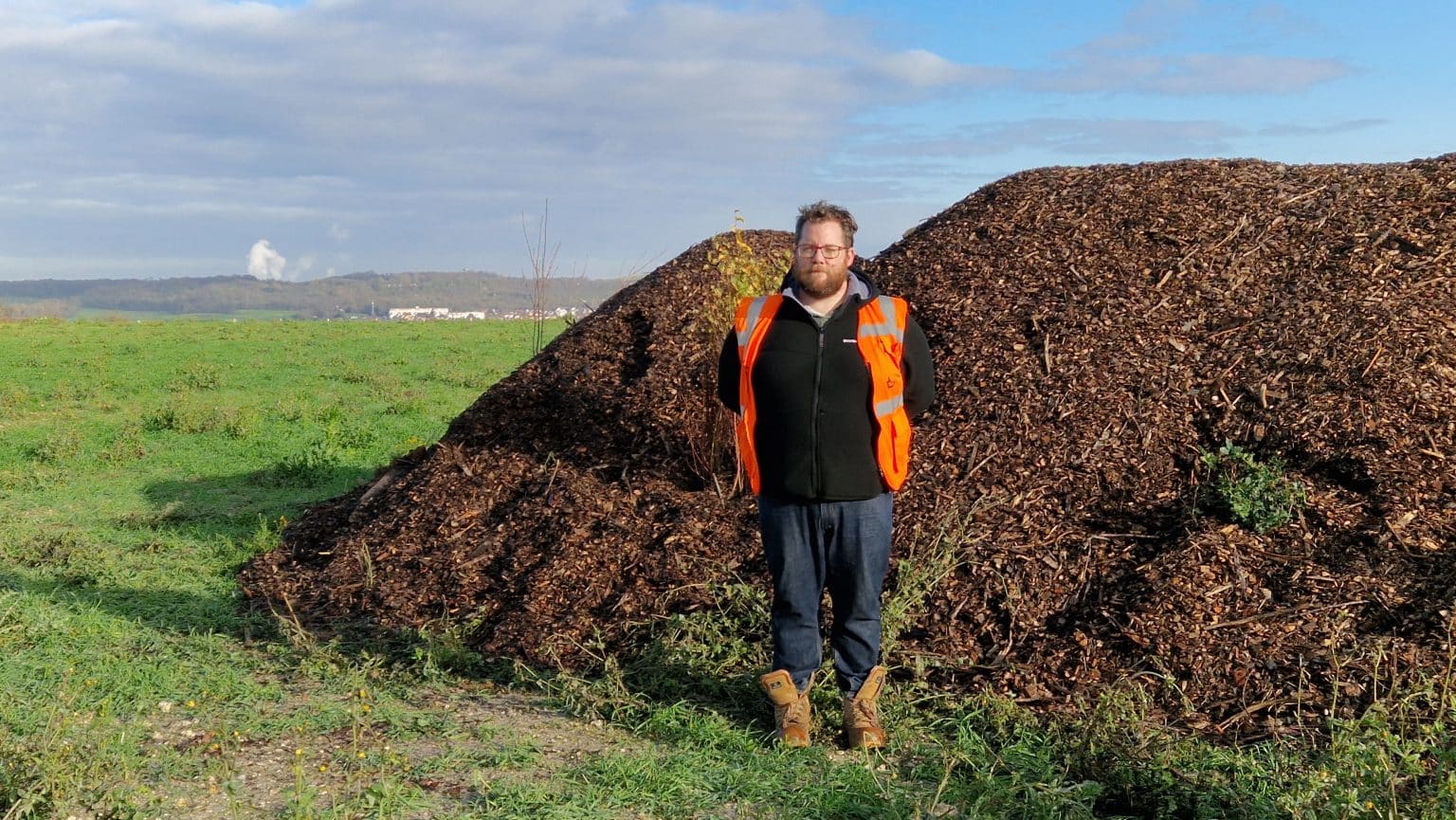
For the past few weeks, Benjamin Chapeau has been a green works supervisor in ECT’s landscaping department. The key words in his job are vegetation, landscape, biodiversity, equipment and weather! To do this, he has to coordinate the work of his teams We work closely with our customers, our suppliers, anticipate plant and equipment orders and meet deadlines. A job in the field and in the great outdoors to serve our projects.
Green spaces supervisor ?
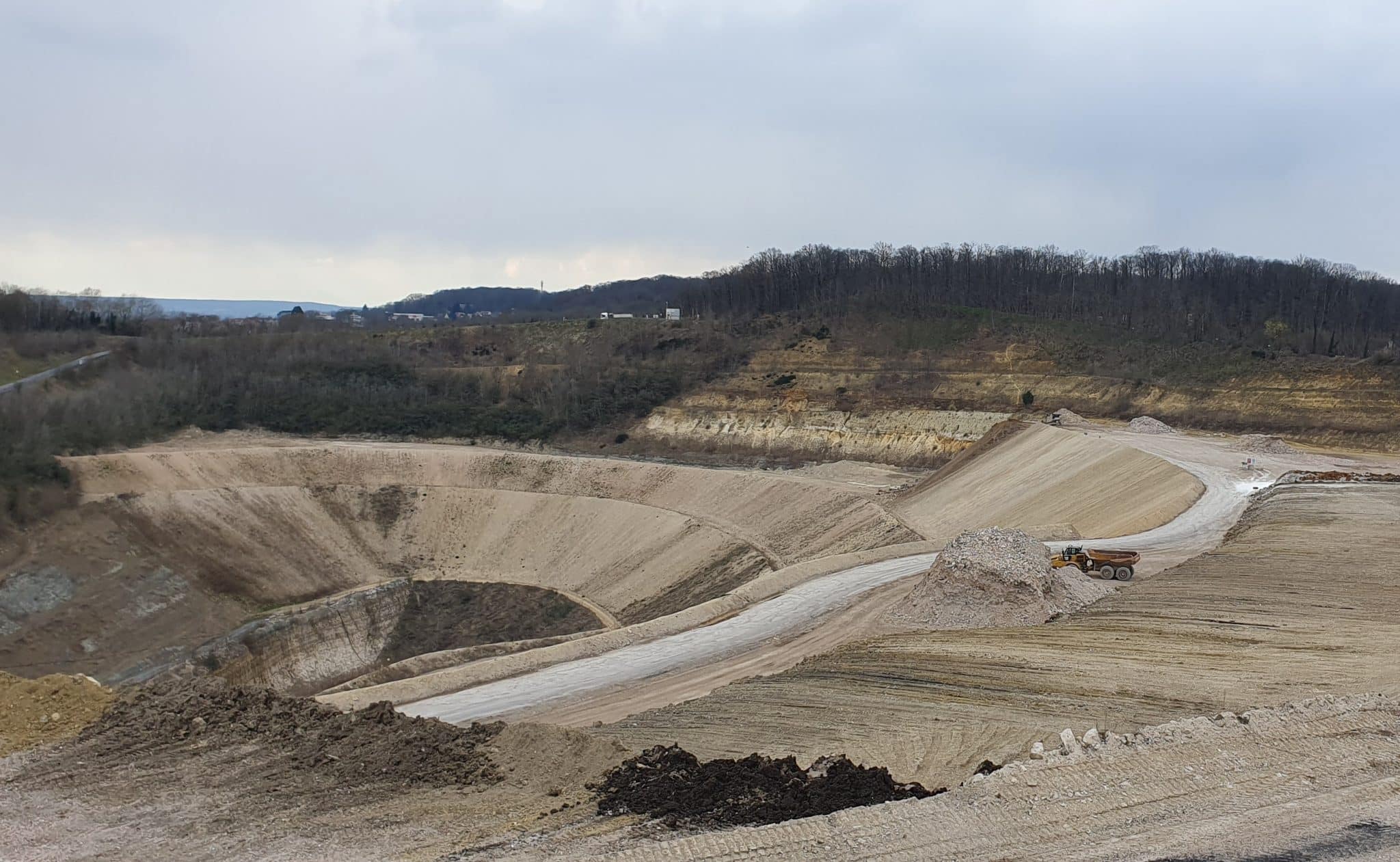
The Green Spaces team intervenes after the inert soil has been added, when the project’s contours have been completed and the last fertile horizon has been put in place. To this end, a fertile horizon is created on top of the inert soil, to support the plantings. This last horizon varies according to the type of environment to be recreated. A limestone meadow does not require the same soil as a wooded hillside. Several options are available: reclaim the topsoil initially stripped from the site. Or create a fertile substrate, a mixture of selected soils (usually silty) and green waste compost. The next step is to prepare the site for revegetation.
Planning is a key element. Every day, we have to adjust our work schedules according to the weather, planting priorities and site progress. The aim is to guarantee a smooth and safe operation, in a spirit of mutual help and trust. My team of Delmindo, Jorge and Alberto are all highly experienced and are always out in the field, much of the time in winter and in all weathers. These are tough jobs, where relationships are essential. And for certain jobs, such as building paths or installing certain items of furniture, we work with the ECT VRD team or outside contractors.
We start as soon as the site is ready to be planted and equipped. We are guided by the project’s landscaping plan, the fruit of discussions between the local authority, the administration and ECT. The landscaping varies enormously from one project to the next. Planting, woodland, pathways, equipment, furniture: we deliver a project ready to be opened to the public.
And biodiversity?
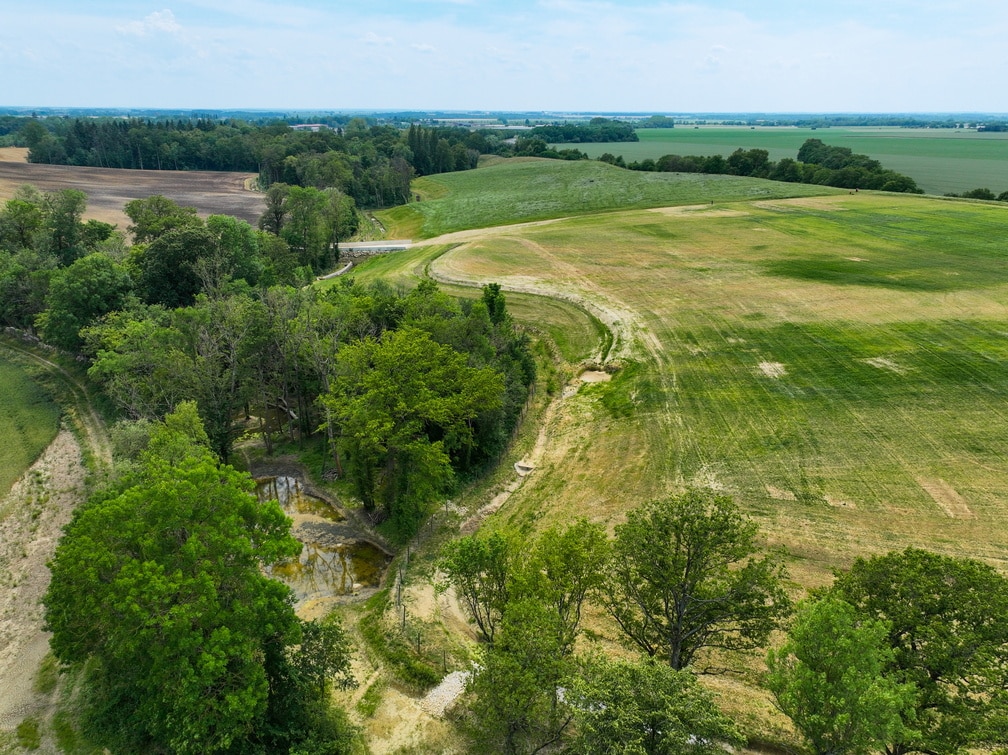
Restoring environments conducive to biodiversity is an essential phase in completing the project. The Green Spaces team is responsible for all the planting and revegetation work involved. We apply nature-friendly management practices, in conjunction with the project’s ecologists and landscape architects: selecting regional and local plants, respecting planting and sowing periods.
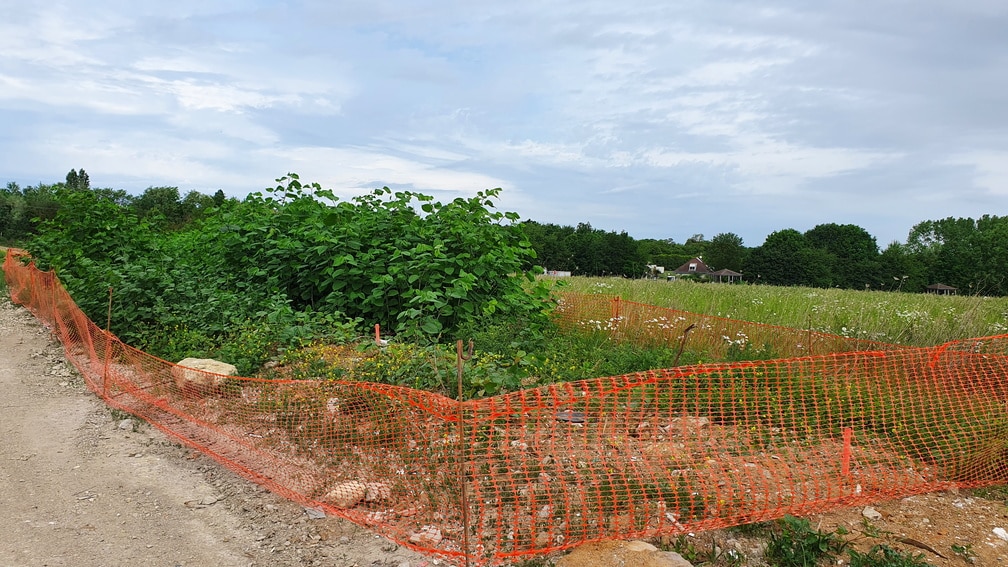
On site, Benjamin has earned the nickname of “frog rescuer”. His team implements the ecological obligations of the project. Preventively, they put in place protective measures such as amphibian barriers. During the works, it maintains and protects wetlands and develops ditches.
Here are a few examples. On the ECT and Safer de l’Ile de France project in Coubert (77), the project includes a hedgerow to complement the rehabilitation of farmland. For the ECT project in Plaisir (78), numerous wildlife cottages were installed during construction. And the planting of local trees and shrubs will reinforce ecological continuity.
A nature-oriented profession
It’s a job that requires you to be curious, versatile and adaptable. Field knowledge, autonomy and interpersonal skills are essential. “Each project is an opportunity to learn, to observe the transformation of the landscape and to participate in the creation of environments favorable to nature and spaces useful to local residents. I enjoy the diversity of the missions and the privileged daily contact with nature,” concludes Benjamin.
Internal promotion
With a BTS in physics and a bachelor’s degree in environmental science under his belt, Benjamin Chapeau joined ECT in 2011. He is an environmental technician. On behalf of our earthwork clients, he manages the removal of soil from construction sites to the appropriate treatment facilities.
In June 2025, as part of the company’s internal promotion policy, he applied for the position of green space project manager. “This role allows me to oversee greening projects from start to finish, combining hands-on fieldwork with coordination, and to see the tangible results of our work,” he explains.