
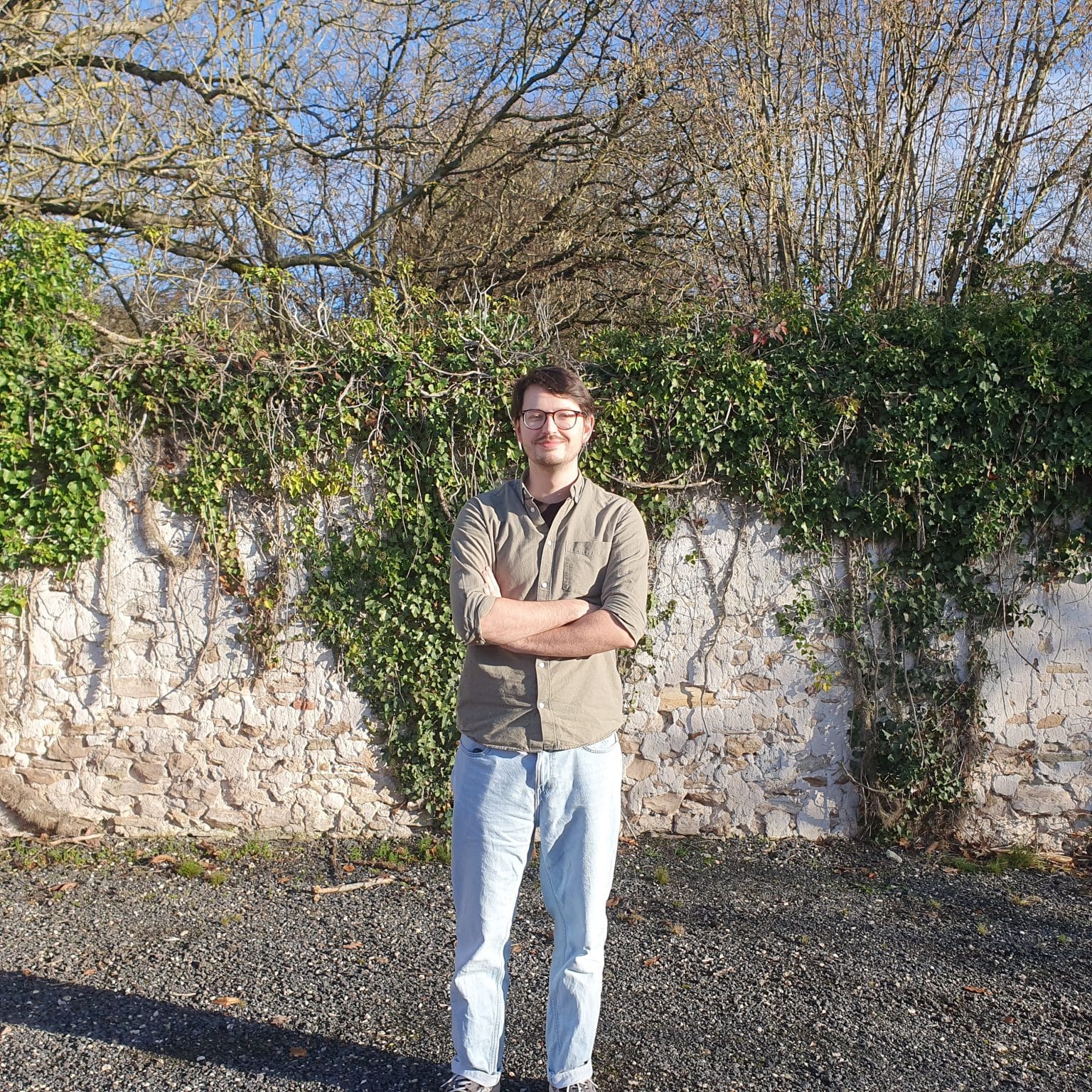
In May 2025, Louis Canesse joined the ECT landscaping team as a landscape designer. Today, he talks about the landscape designer’s role in the company’s non-built projects.
From off-plan projects to site requalification work, ECT’s business is at the heart of territorial transformation. Thanks to ECT, excavated earth from the construction industry becomes a resource, and neglected sites find a new use. Rehabilitation means reading a territory, dealing with its constraints and imagining spaces that are useful, sustainable and alive.
It’s a collective, practical task, where each project must leave a positive mark – for the landscape, biodiversity and local residents.
A personal journey from architecture to landscape
My interest in cities and landscapes grew out of a multidisciplinary career. After studying architecture, I opted for a more technical approach with a bachelor’s degree in civil engineering, followed by a master’s degree in urban engineering and urban planning in 2024. Originally from the North of France, my first professional experiences took me to Istanbul and Berlin, and of course to France.
I joined ECT in May 2025 as a landscape designer, attracted by the company’s singular business model: considering the land as a resource to be valorized in the service of the requalification of territories. This working environment, in line with my environmental values, allows me to express an open and sensitive vision of the landscape. And the diversity of my projects gives me real creative freedom.
Requalifying a site, giving it new meaning
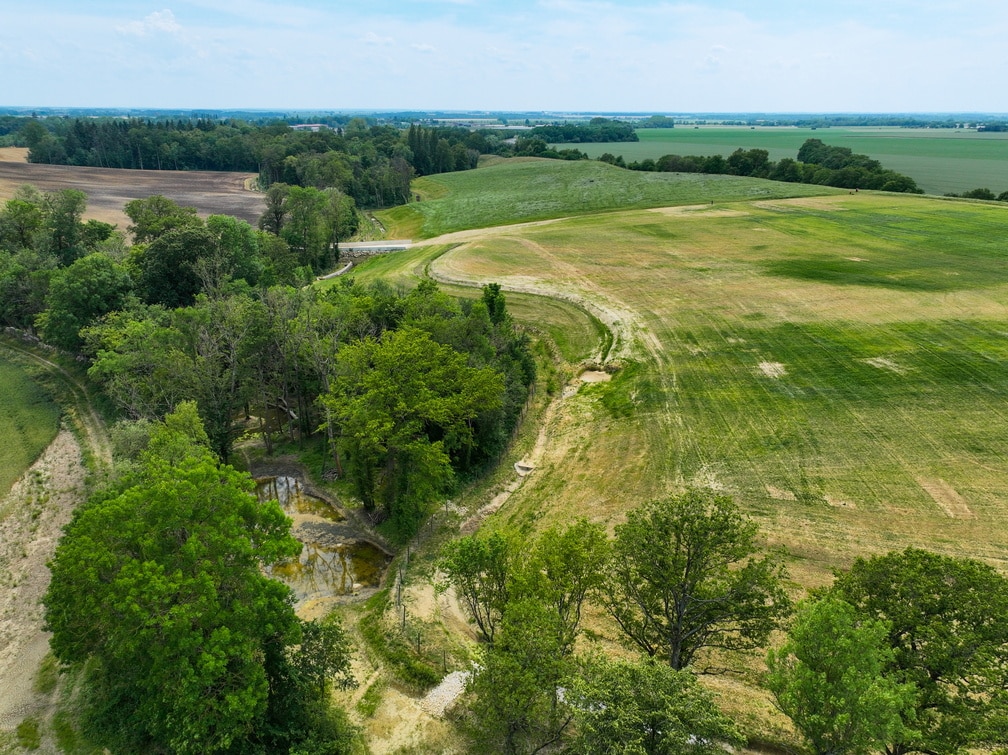
The redevelopment of a site has several dimensions: historical, topographical and geological, and must deal with urban planning constraints, easements and environmental impacts. Designing a new urban park or rehabilitating an agricultural wasteland means proposing a vision in volume, drawing the new contours, inserting them into the landscape and defining a new spatial organization that will support the site’s new uses, in particular facilities and pathways. A project must be connected to the existing natural and urban fabric. My role is to work on this integration in a fair and coherent way.
The other pillar of landscape integration is the restoration of ecological environments. The preservation of biodiversity and the reinforcement of green and blue webs also structure the project, which must reflect our environmental obligations and go beyond them thanks to the recommendations of ecologists. My proposals for plant palettes and choice of species must accompany and support this ecological programming.
This calls for close in-house collaboration with ECT’s Development department and dialogue with the local authority and the environmental authorisation authorities. These exchanges lead to the production of very precise landscape plans. These plans are important in helping local authorities and future users to project themselves into the site’s future.

From plans to site redevelopment
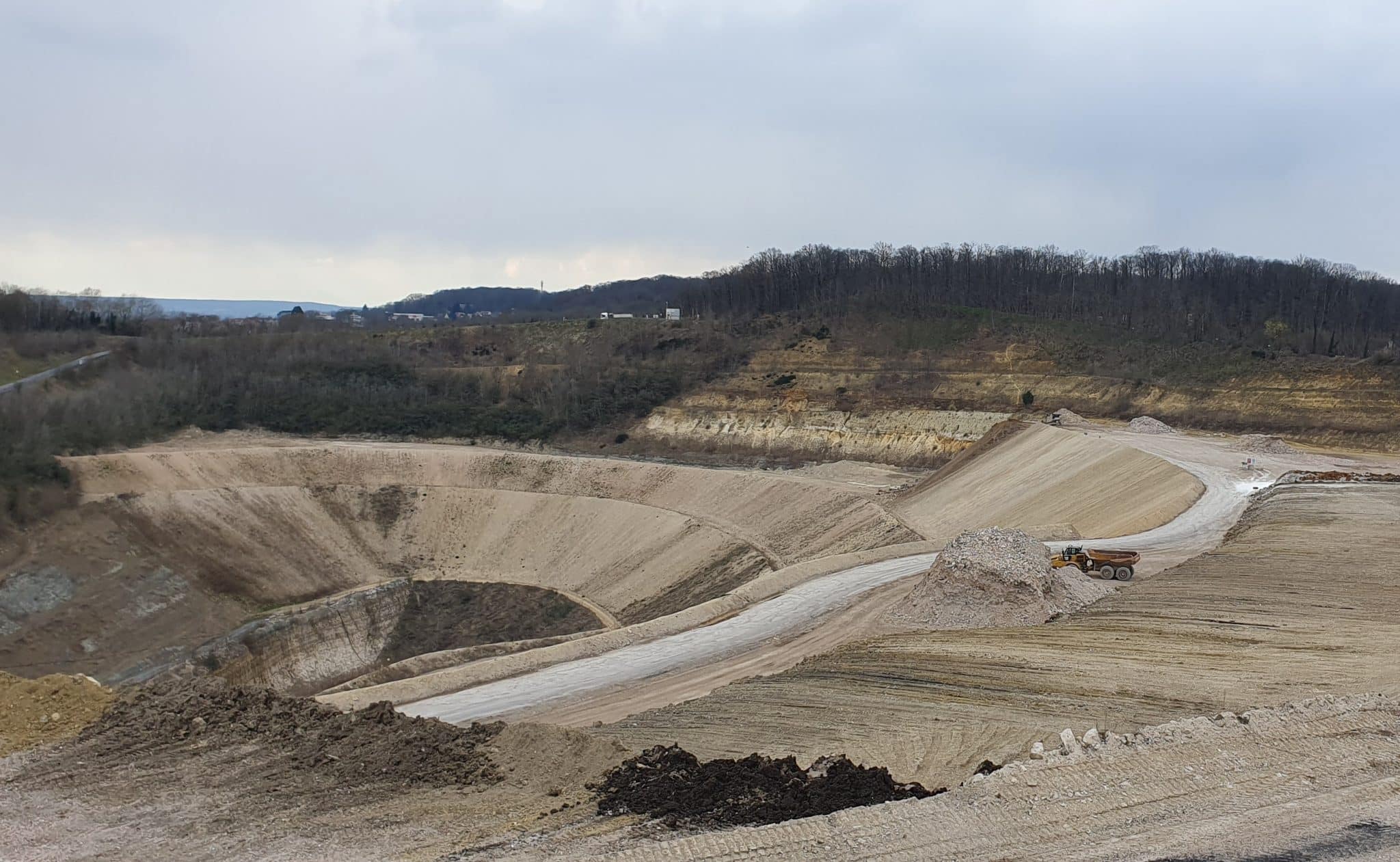
Once the project has been validated and authorized, it’s time to move on from design to construction. At this point, I work closely with ECT’s Operations department to translate the landscaping intention into operational documents. The phasing plans structure the work schedule: delineation of the various zones for receiving excavated soil, stripping of topsoil for reuse at the end of the project, and layout of access roads.
Once the excavated soil has been added, and the hill contours and slope profiles completed, I produce cross-sections and technical plans. These documents, together with the landscape plan, guide the planting of vegetation by the green spaces department and the installation of equipment. They determine the precise location of ditches, valleys, paths, parking lots and leisure facilities. This work ensures continuity between the project plans and the actual implementation of the project.

A collective commitment to local development
The collective dimension of the projects, which mobilize all the departments, is very stimulating. The richness of my missions also comes from the diversity of the projects: landscape parks, agricultural fields, outdoor sports fields, etc. In very different contexts and territories, whether Île-de-France, Hauts-de-France, Grand-Est, Occitanie or even internationally via our Landify US and Landify Germany subsidiaries.
I really appreciate the tangible aspect of my missions: reusing excavated soil makes it possible to design, finance and, above all, implement projects that are consistent with the landscape, enhance biodiversity and benefit local residents. The beauty of the circular economy model deployed by the reuse of excavated soil is that the project comes at no cost to the community. It’s a powerful way of rehabilitating derelict sites.
By 2026, I’ll be working more specifically with the ECT Hauts-de-France agency, a return to my roots that will enable me to strengthen my knowledge of the region. It will also be an opportunity to deepen my expertise in the choice of plant species, in close collaboration with ECT’s ecologist, who is also the land developer for the Hauts-de-France region.