
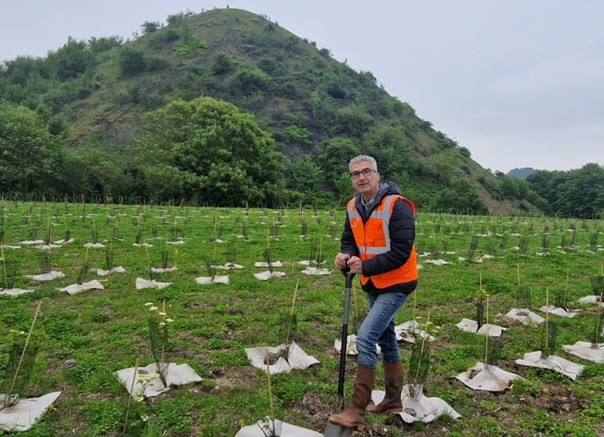
ECT is developing operational expertise in the restoration of brownfield sites. Through concrete projects, Guillaume Lemoine, an ecologist and head of land development at ECT Hauts-de-France, describes how the company transforms degraded or abandoned sites into spaces dedicated to nature, biodiversity, and new uses. This approach is based on a model of co-creation with local authorities and the circular economy of excavated soil, enabling the sustainable redevelopment of areas without drawing on public funds.
It is within this framework that Guillaume Lemoine shares his extensive experience.
Removing barriers : collaborative planning with local governments and project fundingg
The success of our projects hinges on one essential condition: collaborative development with local communities. This involves close dialogue with municipal and intermunicipal teams. In this way, the teams tailor the projects to local specificities: anticipated uses, technical constraints, and acceptance by local residents.
The strength of the ECT model lies in offering a comprehensive vision that integrates the redevelopment/renaturation of sites and its financing into a regional development project. The project thus meets the goals of elected officials: creating biodiversity-rich spaces, transforming dangerous areas and “no-go zones,” and repurposing neglected spaces.
The financing model proposed by ECT is based on the reuse of excavated soil from construction sites. This soil, which is inspected and fully traceable, is subsequently used to reshape sites and recreate soil conducive to vegetation growth.
Consequently, this model enables :
- To fully fund soil restoration, planting, grassing, pathways, and equipment
- To avoid drawing on local government budgets
- To significantly speed up the completion timeline
In practical terms, a project can be implemented in less than two years—without relying on grants, which often take a long time to secure and can even be difficult to obtain.

Projects that adapt to local constraints
In the field, projects often face complex realities: fragmented land ownership, a multitude of stakeholders, regulatory constraints, and project acceptability.
We encounter these constraints on a regular basis. They should not be seen as obstacles, but rather as a starting point for developing appropriate technical solutions.
ECT’s selection of project sites is based on available opportunities. To date, no site has been identified as an “area for renaturation” in zoning plans (SCOT, PLUi) or regional planning (SRADDET). Sites are identified through engagement with local stakeholders (municipalities, social housing providers, associations, public housing agencies, and private landowners).
For the ECT intervention model to be applicable, sites must meet five conditions :
- Offer potential for improvement and transformation (landscape, living environment, biodiversity, social uses)
- Not be located in wetlands or flood-prone areas
- Not be home to protected species that would be significantly impacted by the project
- Allow for temporary truck traffic (appropriate road infrastructure and acceptance by local residents)
- Be located near areas where earthwork and excavation are being carried out by the construction industry
It should be noted that ECT projects are always carried out under administrative permits issued pursuant to the Environmental Code and/or the Urban Planning Code.

The restoration of brownfields : a key element of regional policy
The restoration of brownfield sites is not an isolated project : it is fully aligned with the public policies promoted by local governments.
It helps achieve several objectives at once :
- Combating soil artificialization (ZAN) by renaturalizing artificial areas
- Adaptation to climate change (water management, cool islands)
- Preserving biodiversity
- Development of soft mobility and uses of nature
- Revitalization of neglected or degraded areas
In other words, a single project can contribute to several priorities within a term of office.
The message from the Wavre conference is clear: the tools are available. The question is no longer whether to act, but how to launch projects quickly and effectively when there is a consensus on the future of neglected or damaged spaces.
For elected officials, this implies three things :
- Identify potential and available brownfield sites in their territory (controlled land)
- Surround yourself with partners capable of providing operational solutions
- Agreeing to experiment with new models, particularly in relation to the circular land economy
Every brownfield site is a burden or a source of anxiety for elected officials and local residents… but it can quickly become an immediate opportunity for action.
Renaturing these spaces means turning liabilities into assets :
- From neglected sites to living spaces
- From degraded land to habitats for biodiversity
- From forgotten areas to drivers of appeal
For local governments, this is a practical way to act quickly, effectively, and sustainably, without straining public finances.
The restoration of brownfield sites is no longer an option but a tool available to local governments.
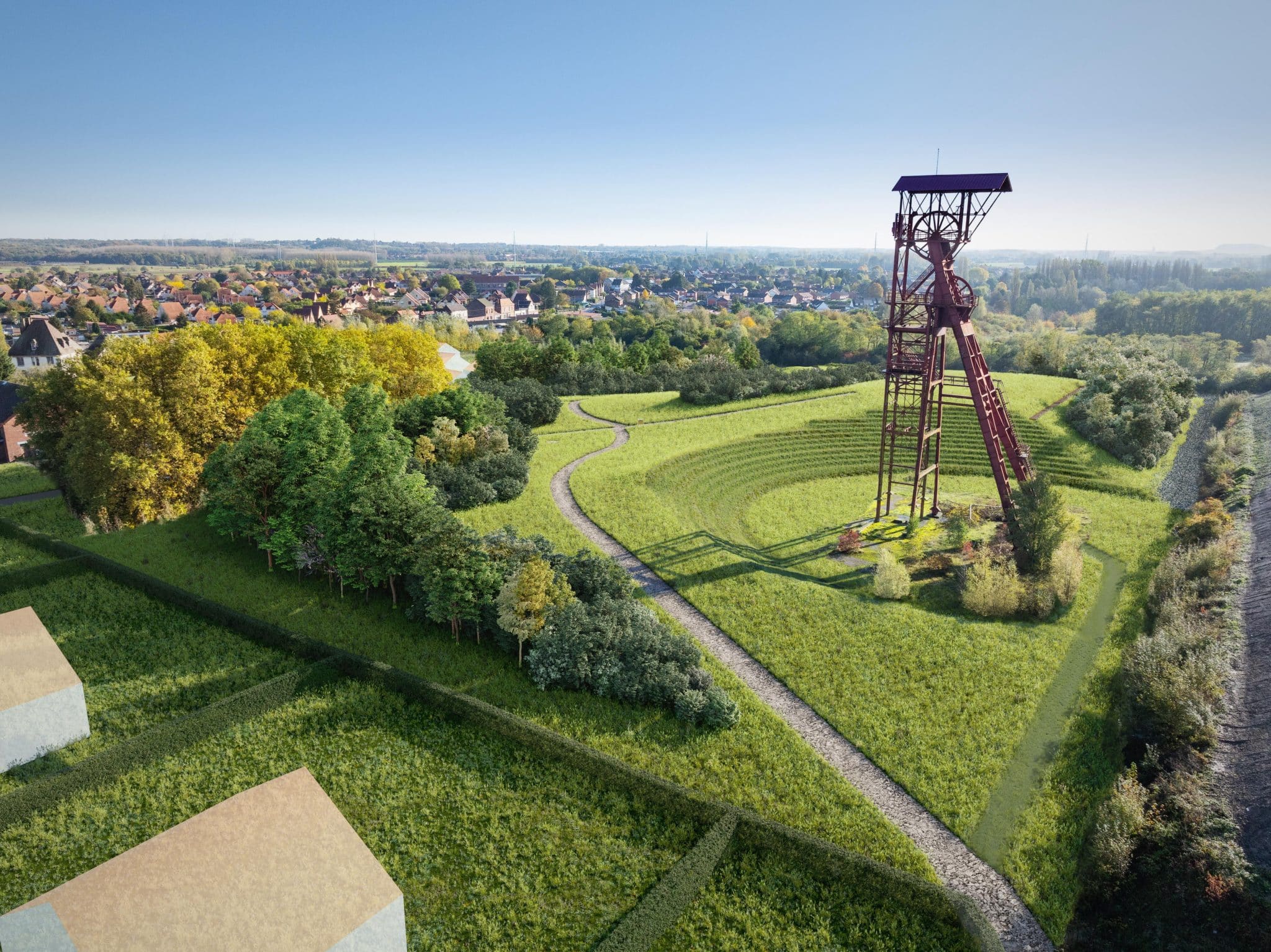
Two examples of transforming wasteland into a biodiversity zone
At the meeting in Wavre, Guillaume LEMOINE, ECT’s biodiversity specialist, spoke to share two case studies conducted in the Pas-de-Calais region. These projects were presented during the afternoon roundtable discussion.
Planting an urban forest on a former industrial wasteland

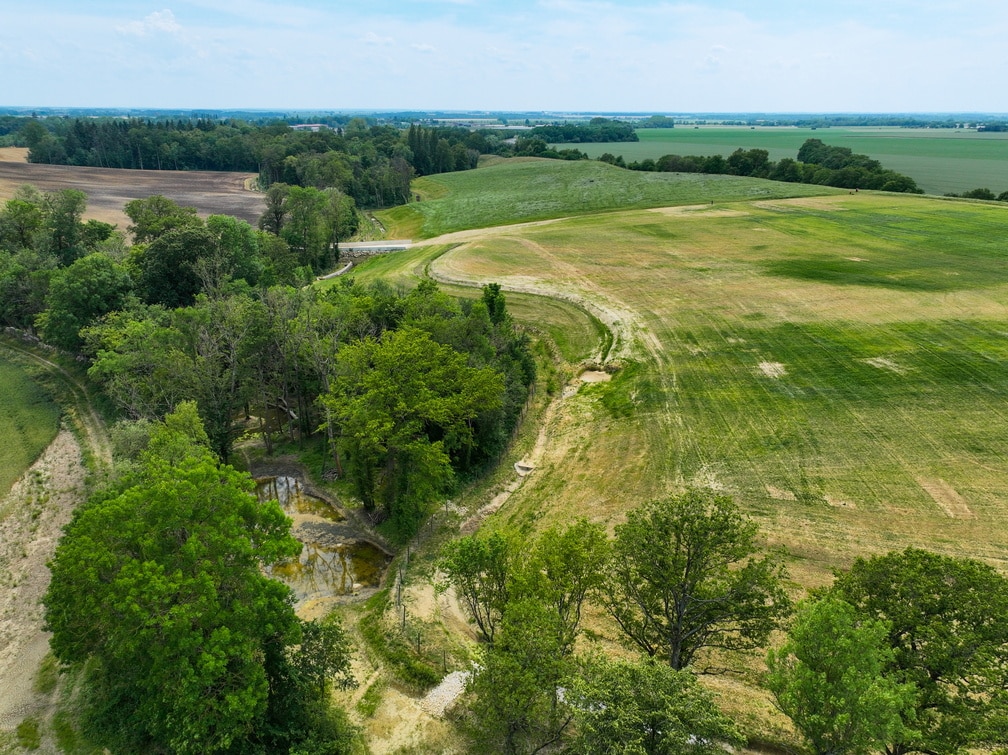
The first example is a project to create a 2.5-hectare urban forest in Lens on a previously demolished industrial site: the Van Pelt site.
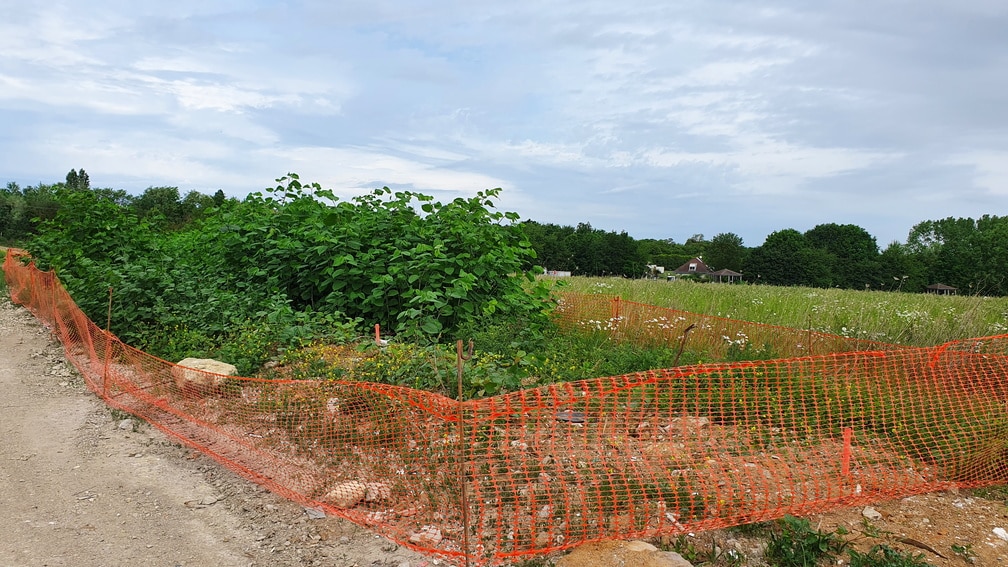
Teams have planted a forest of regional tree species there: young forest seedlings, dense clusters of trees, groundcover seedlings, remediation of a nearby landfill, treatment of Japanese knotweed sites, and the creation of a concave profile in the embankment to store rainwater…
The project, led by EPF Hauts-de-France at the request of the City of Lens, is now part of the green and blue infrastructure network of the Lens-Liévin Urban Community.
Transforming a heavily damaged site into a forested area

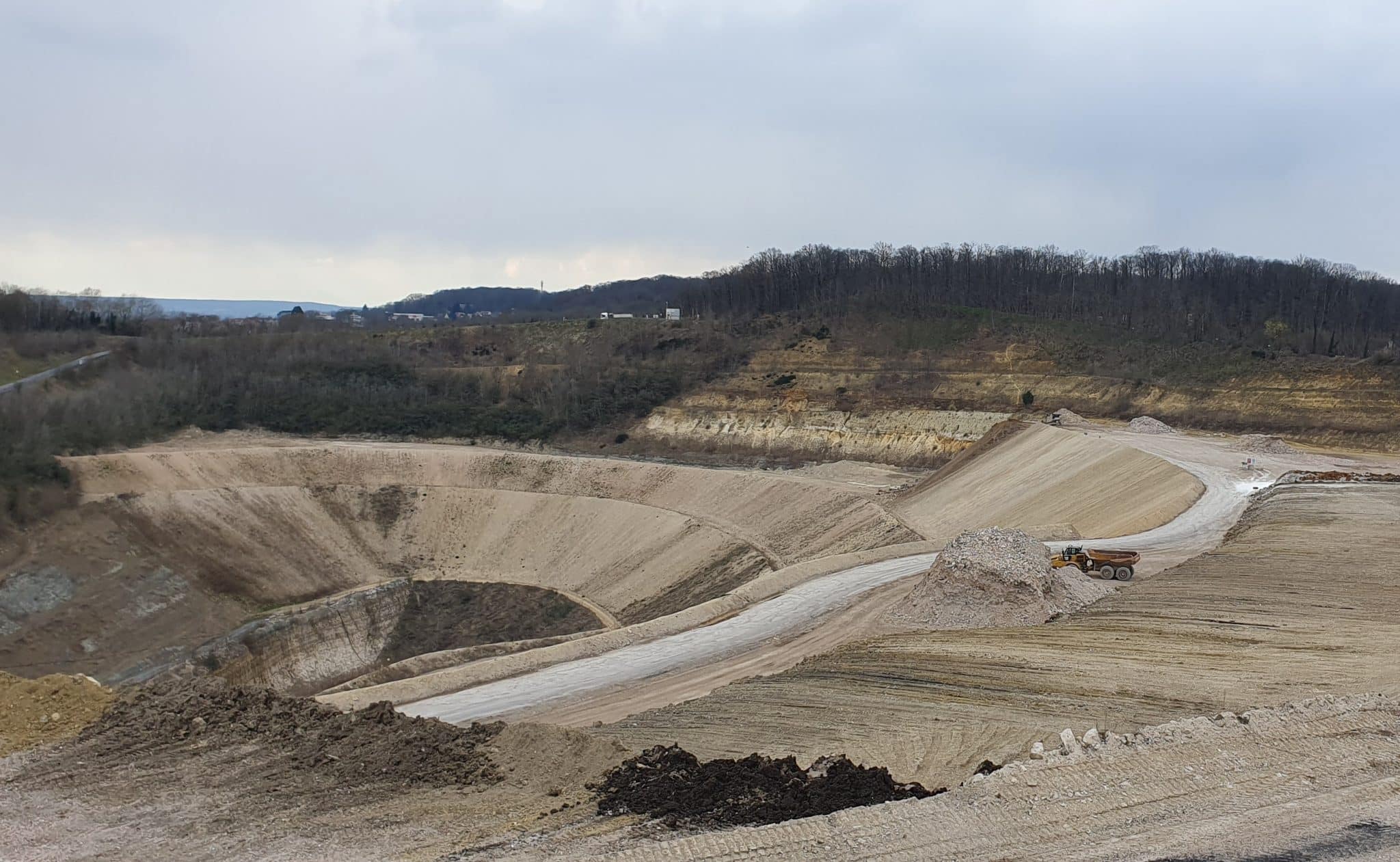
In Mazingarbe, ECT undertook remediation work on a 2-hectare contaminated brownfield site consisting of former coal mine settling ponds located at the foot of a mine spoil heap.
Nearby chemical plants had used the ponds, contaminating them with trace metals (TM) and organic compounds. Over time, these ponds were then converted into a rubble dump. The unused site was overgrown with Giant Hogweed more than 1 hectare.
The project, currently being finalized, aimed to restore the site to use: a hiking trail and an urban forest. It also features a “seed orchard” to locally produce seeds of certified regional genetic origin (for the “local plant” label) in partnership with ENRx.
In both cases, these projects address very specific needs identified by elected officials: securing and redeveloping degraded sites, improving residents’ quality of life, creating accessible natural spaces, and enhancing the area’s appeal—all without using public funds.
From degraded site to living space: non-built brownfield renaturation projects
ECT at the Permanent Conference on Territorial Development in Wavre, Belgium
Guillaume Lemoine spoke on this topic on April 14, 2026, at the Permanent Conference on Territorial Development, held at La Sucrerie in Wavre. The CREAT – UCLouvain, Lepur, and IGEAT-ULB organized the event.
The conference brought together nearly 650 public and private stakeholders. They gathered around a central challenge facing local governments: how can territories be transformed sustainably without further land artificialization ?
In his opening remarks, François Desquesnes, Vice-President of the Walloon Region and Minister for Territorial Development, emphasized that “the redevelopment of brownfields is a major challenge for achieving more resource-efficient, sustainable, and resilient land planning.”
Throughout the day, one conclusion became clear : brownfields are both a management challenge — and a tremendous source of opportunity.